Key takeaways
- Downspouts either discharge on the surface or into buried pipes
- Catch basins trap silt on purpose
- Both need cleaning at least twice a year
- Water should end up well away from the foundation
Follow the water
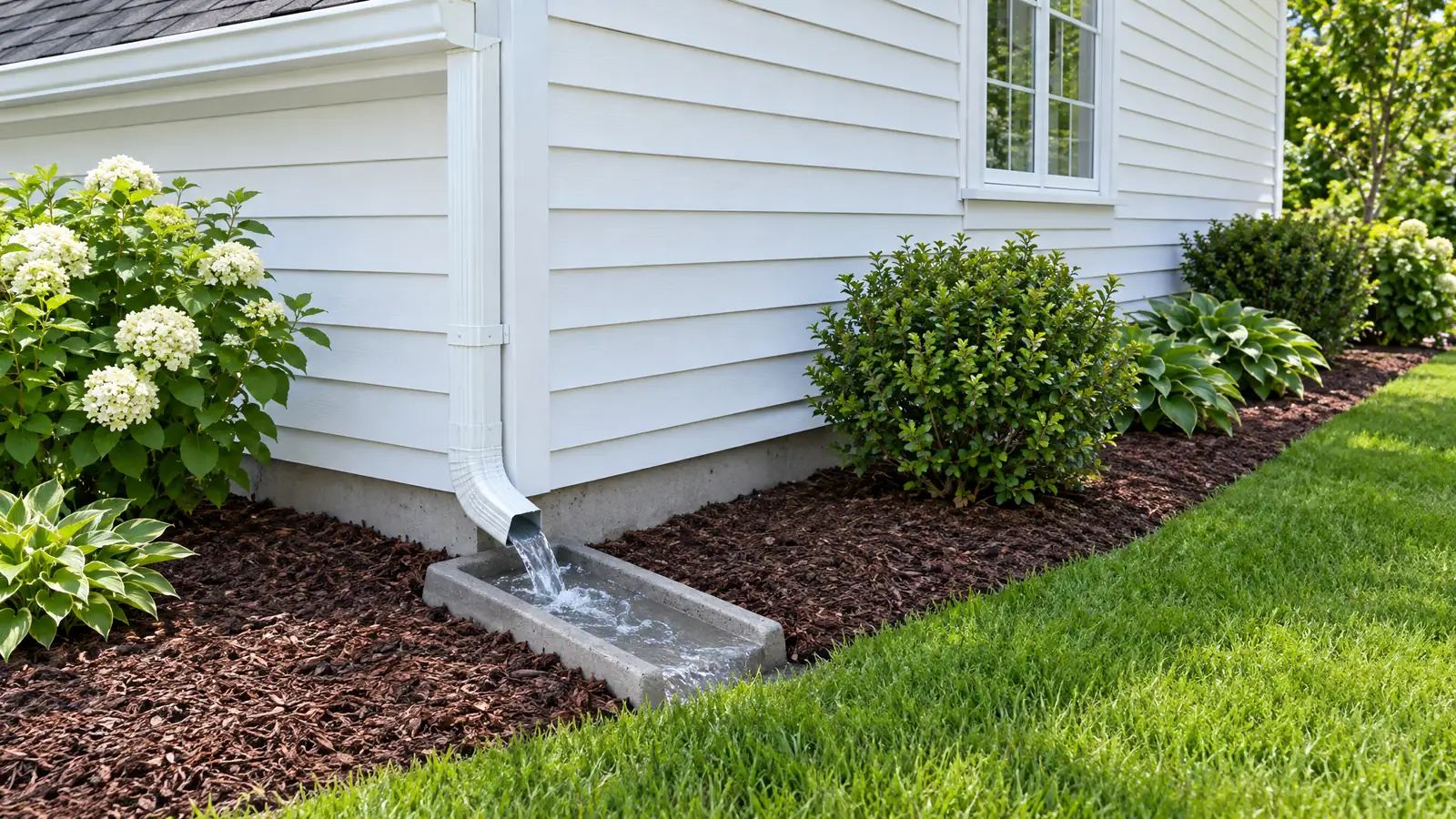
Walk your property in a rain and watch where roof water goes. It may spill from a downspout onto a splash block, run through a buried pipe to the street or a low spot, or soak in near the foundation. Know which.
That tells you what needs cleaning.
Buried downspout lines
Some downspouts connect to underground pipes. Leaves, silt and roots slowly fill them. Water backs up at the downspout and overflows the gutter. Flushing the line once or twice a year keeps it open.
A cleanout at the connection makes this much easier.
Catch basins and area drains
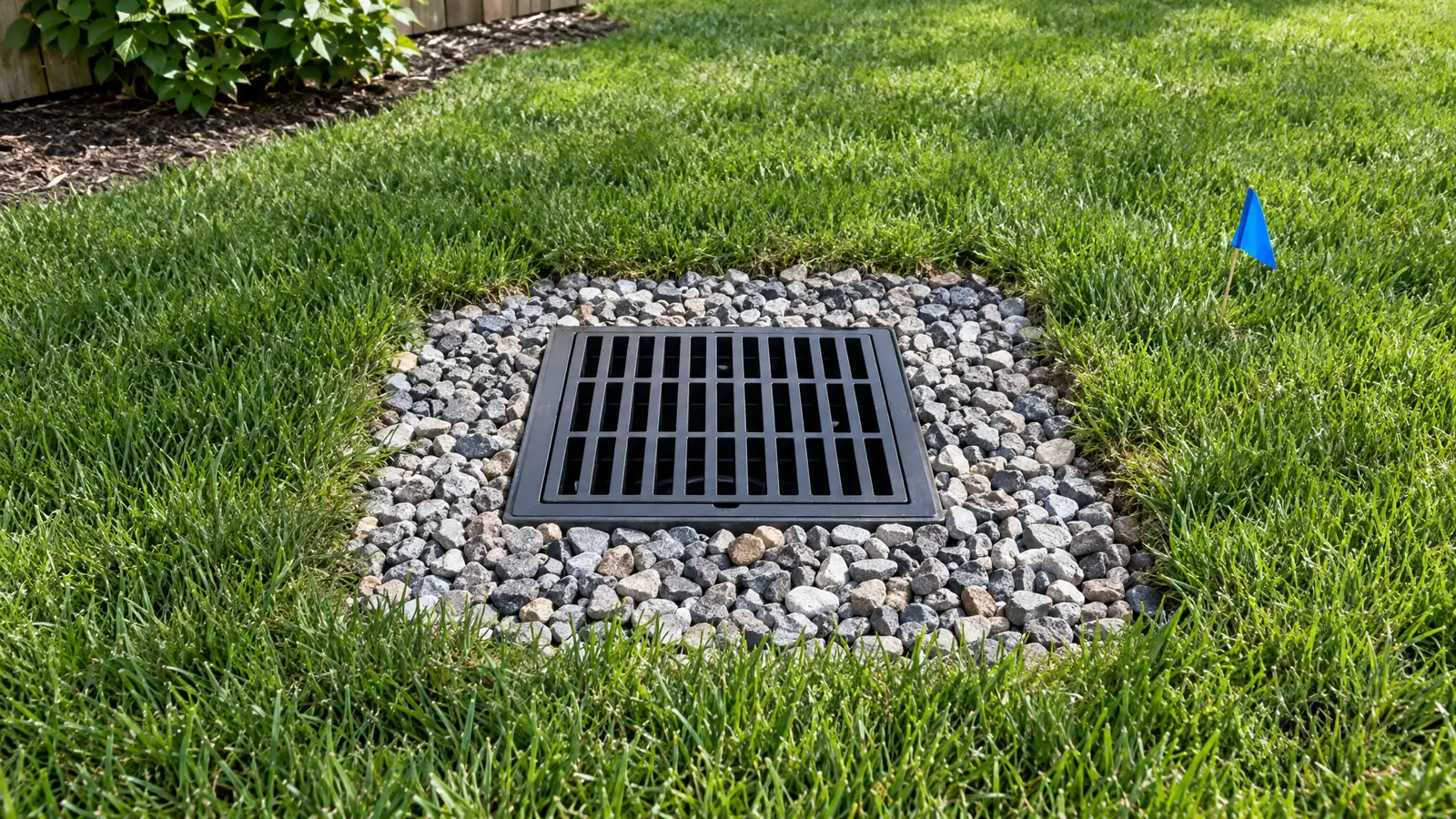
A catch basin is a box under a grate that collects surface water and traps silt before it enters the pipe. The silt builds up, by design, and has to be removed. Check basins in spring and fall, and after big storms.
A full basin does nothing.
Where it should end
Water should be carried several feet from the foundation, to a splash block, a pop-up emitter, a rain garden or a storm system where permitted. Never connect storm water to the sanitary sewer.
Ask us about the layout of your property.
Quick answers
Can I clean a catch basin myself?
Often yes, with gloves and a bucket. A buried line needs equipment.
Why does the basin keep filling?
It is doing its job, trapping silt. That is why it needs a schedule.
Ready to put this on a schedule?
Call (615) 952-0844 or send the form below, and we will suggest a plan for your property.