Key takeaways
- Scrape plates into the trash, not the sink
- Wipe greasy pans with a paper towel before washing
- Run hot water after using the disposal
- A drain strainer catches what you would otherwise wash away
Keep fats out
Cooking fat is liquid in the pan and solid in the pipe. Pour it into a can, let it set and throw it away, and wipe greasy pans and plates with a paper towel before washing. Hot water does not solve it; it only carries the grease further down.
This one habit does more for a kitchen drain than any product.
Scrape and strain
Scrape food scraps into the trash and use a sink strainer for the rest. Starchy foods such as rice, pasta and potato peels swell and stick, coffee grounds settle in bends and eggshells do not belong in a drain.
Empty the strainer into the trash every day.
Use the disposal gently
Run cold water while the disposal works and for about half a minute afterward, and feed it small amounts at a time. Skip fibrous things such as celery and corn husks and anything hard, such as bones.
A disposal grinds food, but it does not make it disappear.
Add a monthly habit
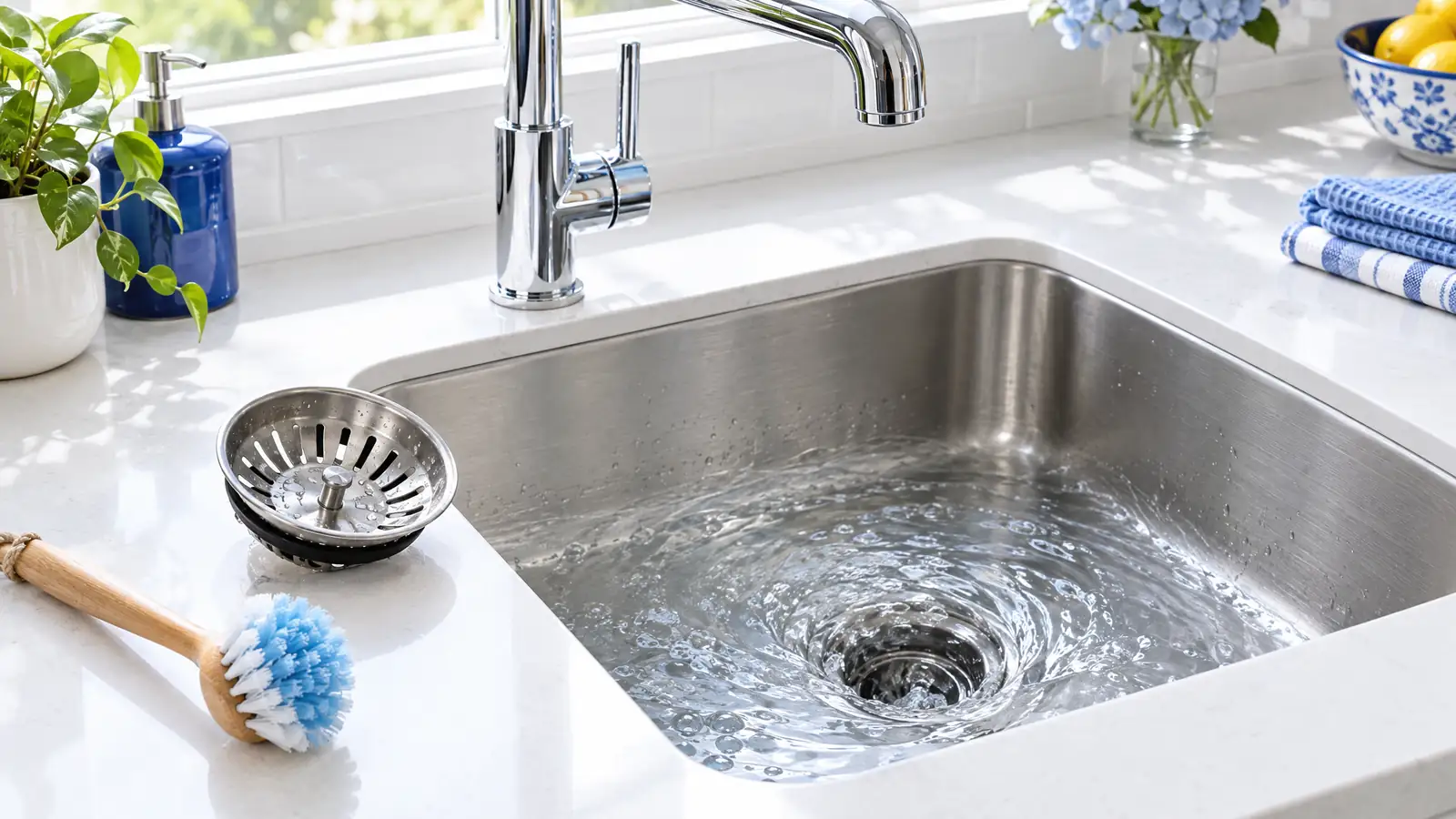
Once a month, remove the strainer, rinse it and clean the rim of the drain with a brush. A gentle enzyme treatment can help with odors between professional cleanings.
These habits stretch the time between visits and make each visit easier.
Quick answers
Can I pour boiling water down the drain?
It is not effective against grease, and it can harm some pipes. Prevention matters more.
Do chemical cleaners help?
They can be harsh on pipes and hazardous to handle. A scheduled mechanical cleaning is more thorough.
Ready to put this on a schedule?
Call (615) 952-0844 or send the form below, and we will suggest a plan for your property.