Key takeaways
- Restroom clogs are mostly about what is flushed
- Signs and bins help
- Floor drains need water in their traps
- Schedule visits outside business hours
What goes wrong
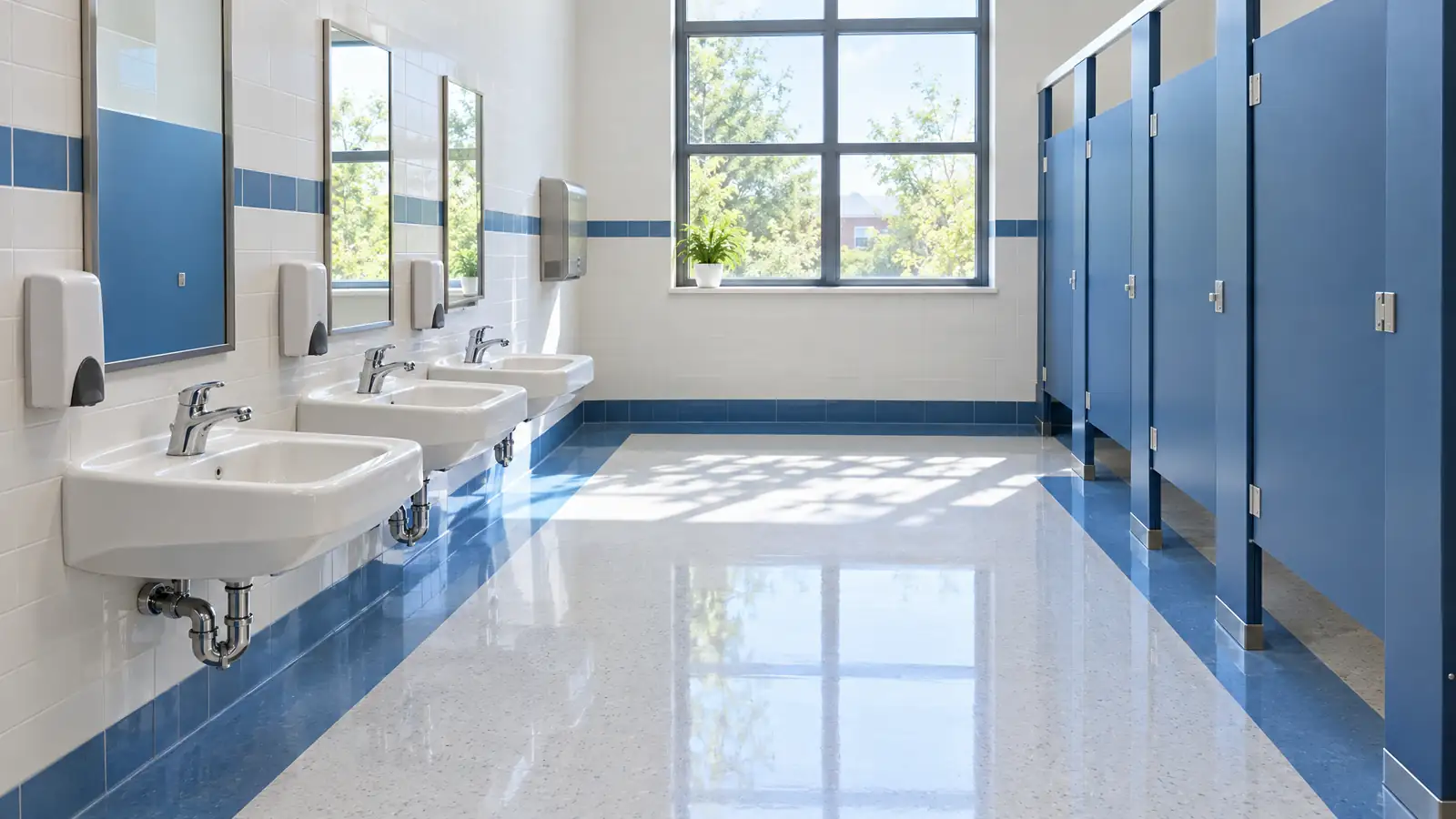
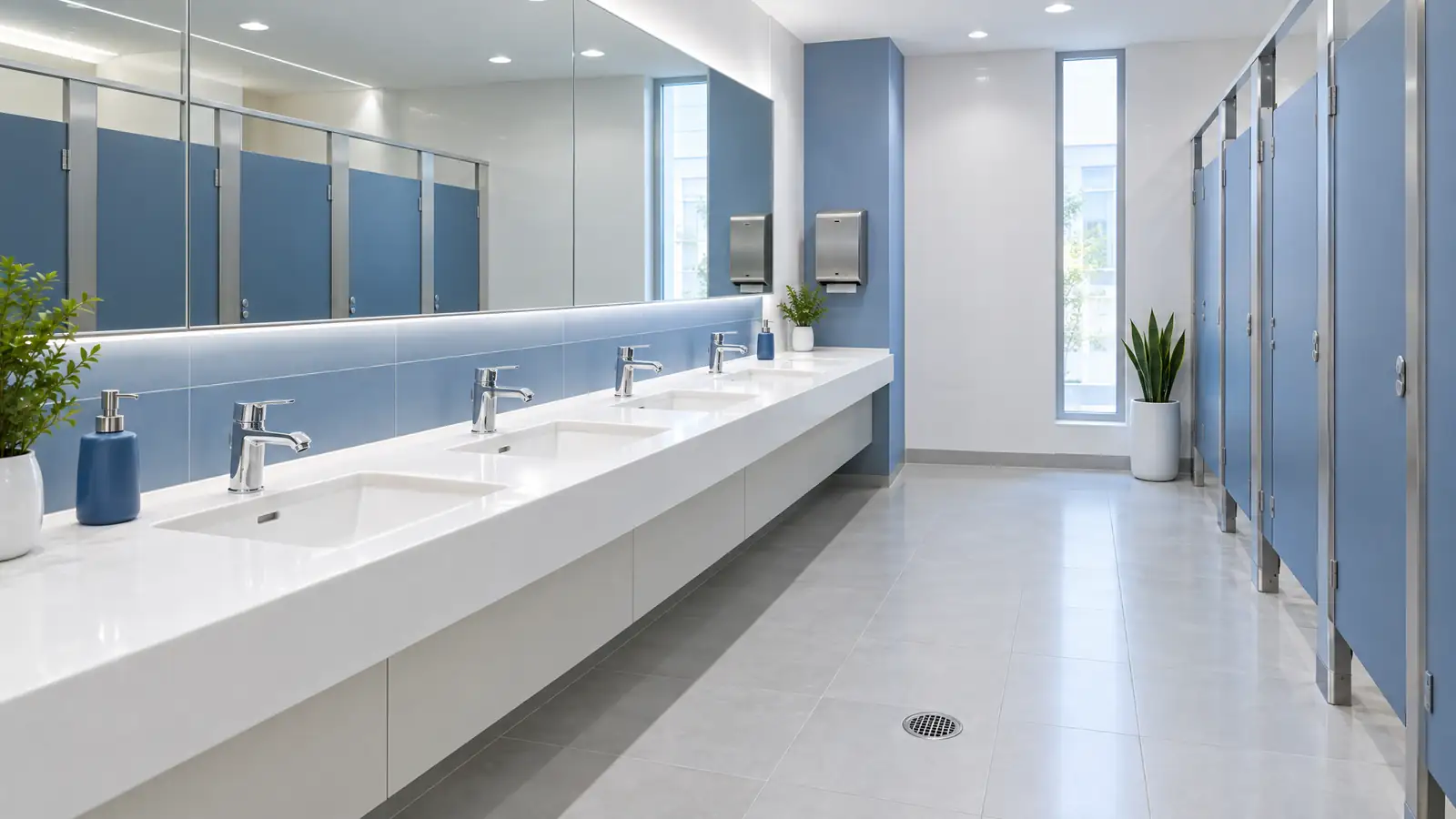
Wipes, paper towels, feminine products and the occasional foreign object cause most restroom blockages. Floor drains dry out and let in odors, and shared lines collect buildup that nobody sees.
The cost is a closed restroom and a poor impression.
Reduce the load
A small sign and a lidded bin in every stall do more than a reminder email. Use quality paper that dissolves, and check the dispensers. For high-traffic restrooms, consider more frequent cleaning.
Put drain checks on the facilities checklist.
Keep floor drains sealed
Pour water into every floor drain monthly, especially in rarely used restrooms, and have the trap checked on each visit. A dry trap is the most common cause of sewer smell in a business.
Add it to the cleaning crew’s list.
Schedule smartly
A quarterly visit, timed outside business hours, cleans the main restroom drains and checks the line. For heavy-traffic buildings, every other month may suit. Each visit should leave a written record for facilities.
Plan the dates a year ahead.
Quick answers
Who should handle the signs and bins?
Facilities or the cleaning crew. We can suggest wording.
Can you work overnight?
We schedule around your hours wherever we can.
Ready to put this on a schedule?
Call (615) 952-0844 or send the form below, and we will suggest a plan for your property.