Key takeaways
- The dish pit handles the most water and solids
- Pre-rinse and scrape before loading
- Keep strainers in every basin
- Clean traps and lines on a schedule
Why the pit is different
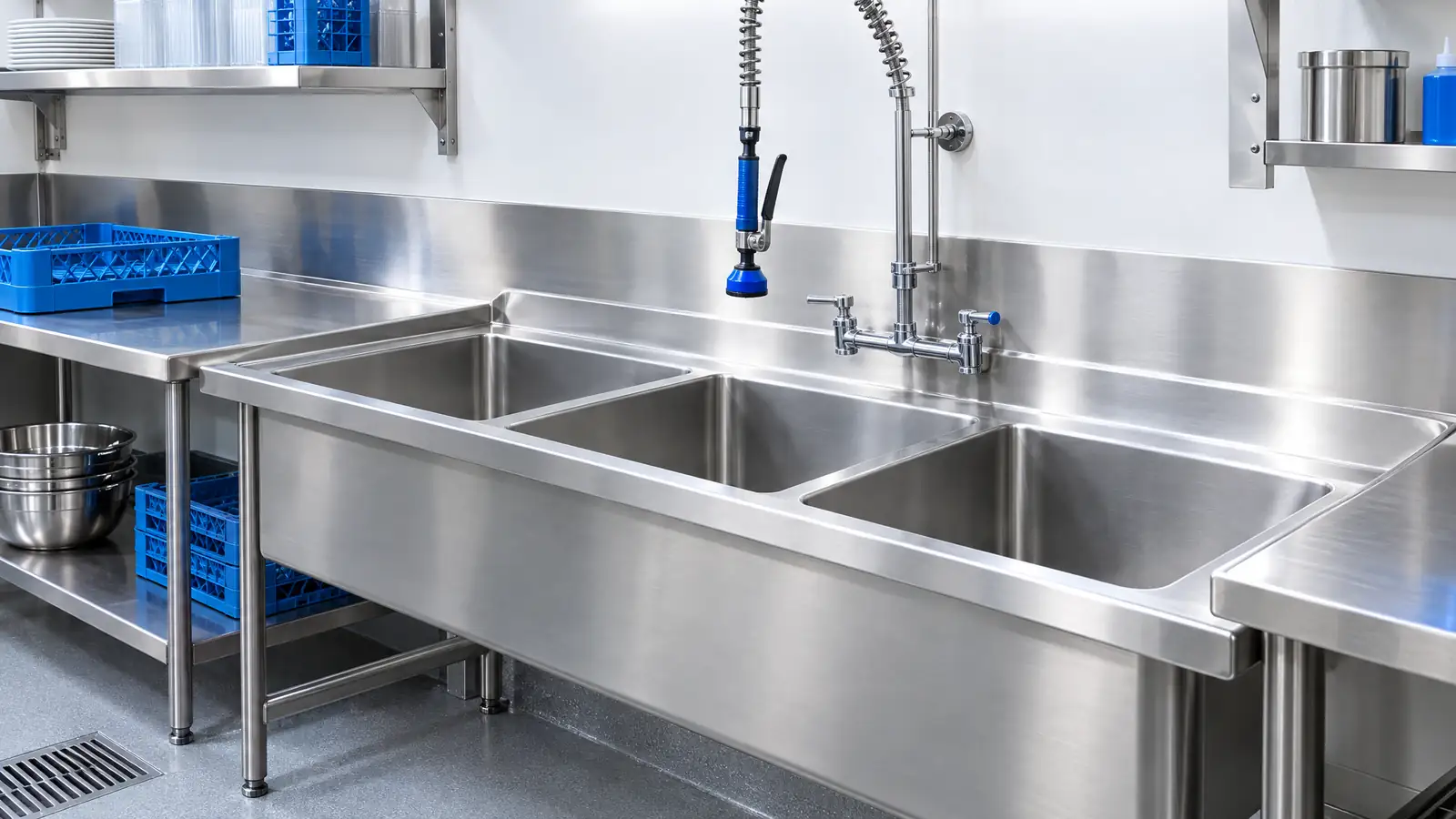
A dish pit moves more water, soap, starch and food solids than any other fixture, all day. Even good strainers let fine solids through, and those settle in traps and the first run of pipe.
It is the first place a kitchen drain problem shows up.
Pre-rinse and scrape
Scraping plates into the trash before they reach the sink cuts the solids load dramatically. A pre-rinse spray over a strainer catches the rest. Teach it to every new dishwasher.
It costs nothing and saves a great deal.
Strainers everywhere
Every basin needs a working strainer, and strainers need emptying throughout the shift, not just at close. Replace missing or bent ones immediately.
A strainer that is always full is a sign the volume has grown.
Schedule the deep clean
The traps and lines behind the pit need a professional cleaning on a schedule, quarterly at a minimum for busy kitchens and monthly for heavy volume. Ask us to check the connection to your grease system at the same time.
Write the dates on the kitchen calendar.
Quick answers
Why does my dish pit back up at peak?
The volume is overwhelming a partly narrowed line. A cleaning and a camera look usually show why.
Do I need a bigger line?
Sometimes. Ask us after a camera check.
Ready to put this on a schedule?
Call (615) 952-0844 or send the form below, and we will suggest a plan for your property.