Key takeaways
- Floor drains collect food, grease and moisture all day
- Daily rinsing and scraping help a lot
- Biofilm causes odors and attracts flies
- Schedule a professional cleaning monthly
Why drains get dirty
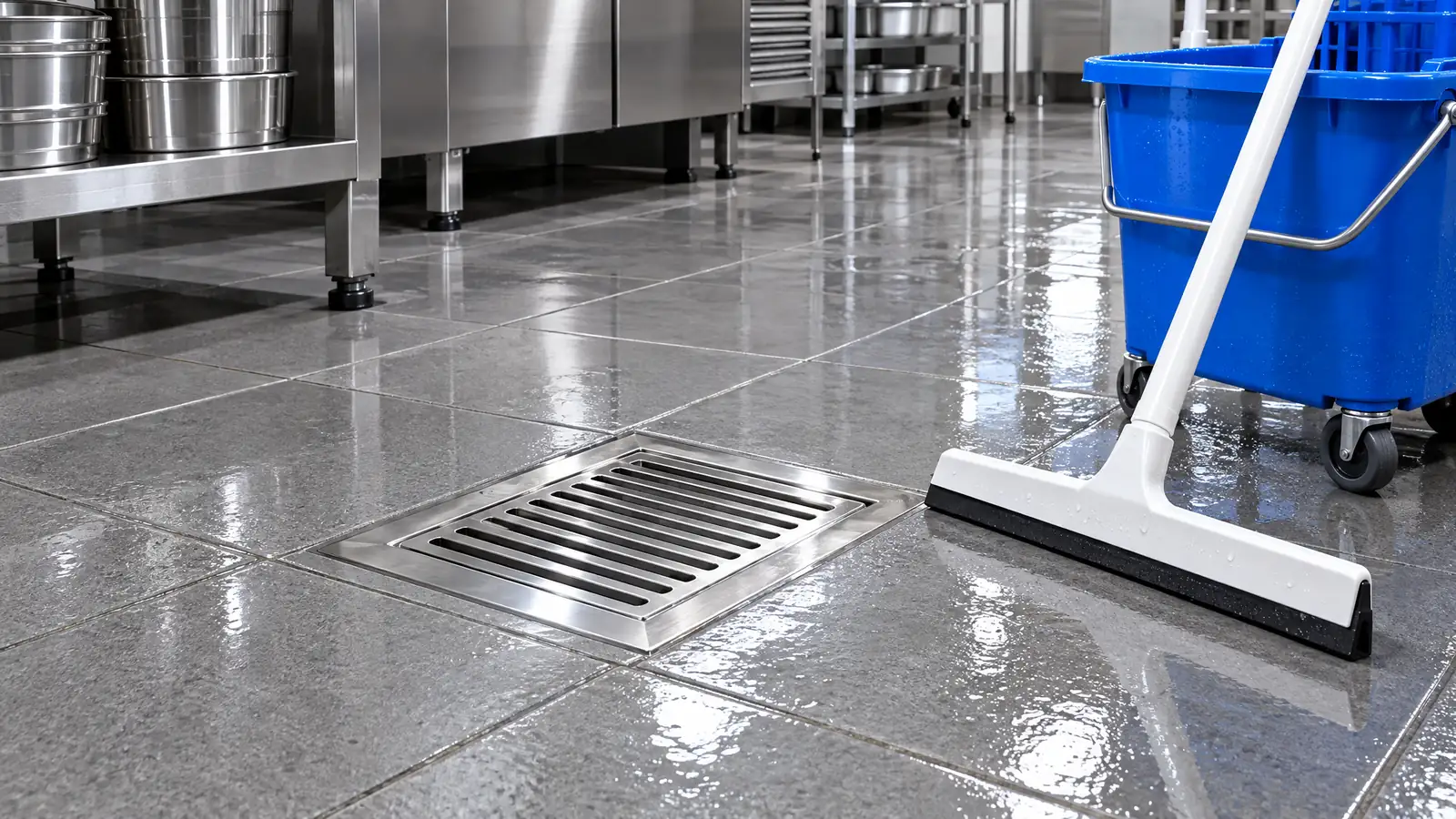
Mop water, spills and washdown carry food scraps and grease into the floor drains. In the dark, damp pipe, bacteria build a slimy layer called biofilm that smells and feeds flies.
The layer is easy to ignore because it is out of sight.
What staff can do daily
Remove the grate and scrape off visible debris at closing, rinse the drain with hot water and a brush, and keep strainers in place. Avoid pushing solids down the drain with a hose.
A short daily routine keeps the surface clean.
What staff cannot reach
Biofilm lines the pipe below the grate and in the trap, and a hose will not remove it. That is where a scheduled professional cleaning comes in, with brushes, jetting and a sanitizing treatment.
Monthly is a common rhythm for busy kitchens.
Flies and odors
Drain flies breed in the slime inside the drain. Cleaning removes their food and nest. A drain that smells after cleaning may have a dry trap or a vent problem, which we can check.
Fix the cause, not just the smell.
Quick answers
Can I use bleach in the drain?
It does not remove biofilm well and can be harsh on pipes. Mechanical cleaning is more effective.
How often should floor drains be cleaned?
Daily at the surface, monthly by a professional for busy kitchens.
Ready to put this on a schedule?
Call (615) 952-0844 or send the form below, and we will suggest a plan for your property.