Key takeaways
- A common guideline is to service before the trap is a quarter full
- Trap size and meal volume drive the interval
- Local rules may set a minimum frequency
- Keep a dated record of every service
What a trap does
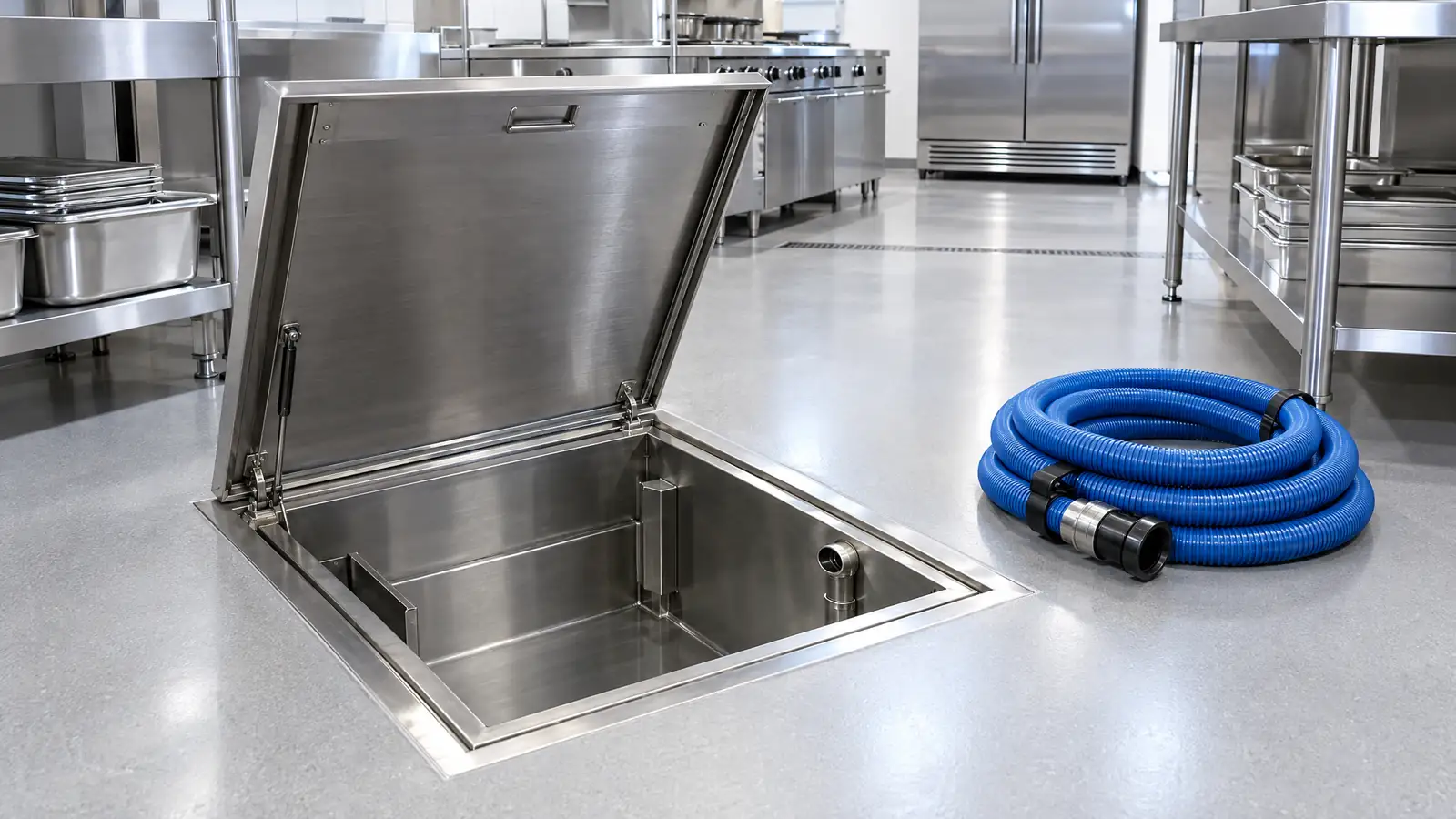
A grease trap or interceptor slows the wastewater from your kitchen so fats, oils and grease float to the top and solids sink to the bottom, while cleaner water flows out the middle. It only works while there is room for both layers.
When it fills, the layers reach the outlet and grease heads downstream.
The quarter-full guideline
A widely used guideline is to service a trap before grease and solids fill about a quarter of its working capacity. By that point the trap is still working well, and there is a margin if the kitchen has a busy week.
Our Trap Schedule Calculator turns the guideline into a planning interval from your trap size and volume.
What changes the interval
Fry-heavy menus, high volume, small traps and dishwashing that sends food solids into the trap all shorten the interval. A small cafe with a large trap can go longer. The first few services show how fast yours fills.
Adjust the schedule to what you see.
Records and rules
Local utilities and cities may set a minimum service frequency and require records. Ask your utility what applies to you. Keep a dated record of every service, including the date, the trap and what was done, and keep it where you can find it quickly.
We write a record for every visit.
Quick answers
Can I pump the trap myself?
Some operators clean small traps in-house, but disposal rules apply. Ask your utility.
What happens if I skip service?
The trap stops catching grease, lines downstream coat, and a backup becomes more likely.
Ready to put this on a schedule?
Call (615) 952-0844 or send the form below, and we will suggest a plan for your property.